
Top Benefits of a Quran Learning Game for Kids
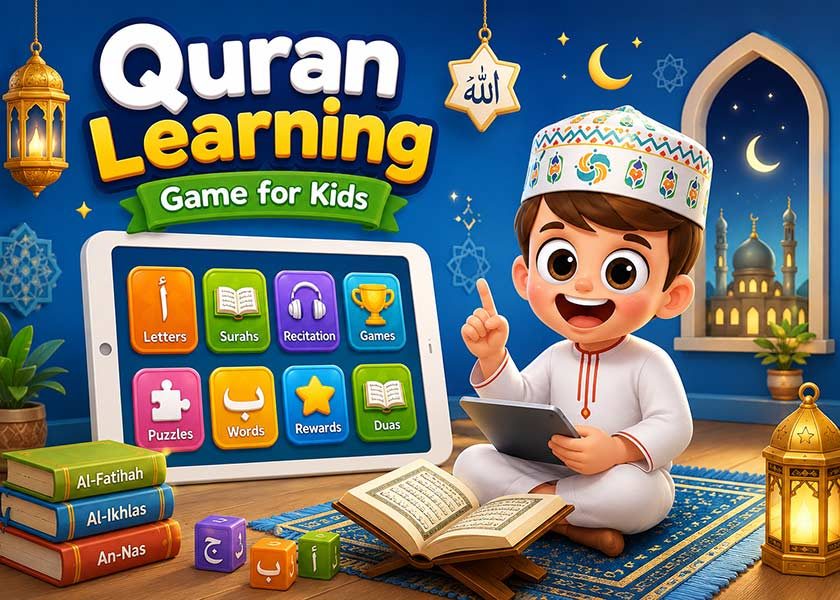
Introducing children to the Quran at an early age can help them develop important knowledge, good habits, and Islamic values. However, keeping young learners interested and motivated can sometimes be challenging. A Quran Learning Game for Kids offers a fun and interactive way to make Quran education more enjoyable for children.
By combining learning activities with games, colorful visuals, audio, rewards, and simple challenges, children can practice important skills while having fun.
1. Makes Quran Learning More Enjoyable
Children naturally enjoy games, challenges, colorful characters, and rewards. A Quran learning game can transform traditional practice into an interactive experience.
Instead of spending a long time memorizing information, children can complete short activities and gradually improve their skills.
For example, a game may ask children to identify an Arabic letter, match a word with an image, listen to a Quranic verse, or complete a simple puzzle.
When learning feels like play, children may be more willing to practice regularly.
2. Helps Children Learn Arabic Letters
Arabic letters are an essential foundation for learning to read the Quran.
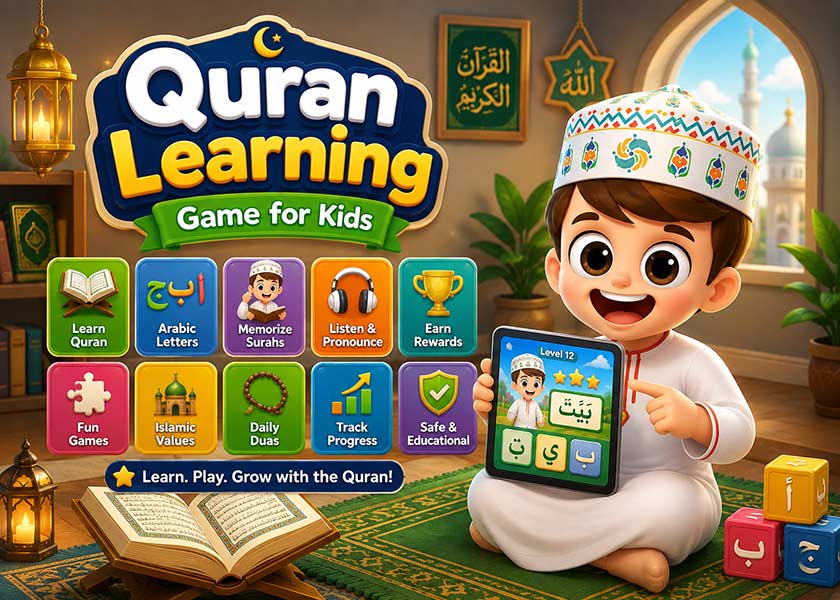
A Quran Learning Game for Kids can introduce Arabic letters through interactive activities such as:
- Letter recognition
- Matching games
- Arabic alphabet puzzles
- Listening exercises
- Simple quizzes
- Interactive pronunciation practice
Children can repeat activities several times until they become familiar with the letters and their sounds.
This approach can be particularly helpful for young children who are just beginning their Quran learning journey.
3. Supports Quran Memorization
Memorizing Surahs requires regular repetition and practice.
A Quran learning game can make memorization more engaging by allowing children to listen to verses, repeat them, and review previously learned Surahs.
A game can also divide a Surah into smaller sections. Instead of trying to memorize everything at once, children can focus on one verse or a short section before moving to the next level.
This can make the memorization process feel easier and more achievable.
4. Improves Listening and Pronunciation
Listening is an important part of Quran education.
Children can listen to correct Quranic recitation and repeat words or verses. Interactive audio activities can encourage them to pay attention to pronunciation and rhythm.
For younger children, hearing the same verses repeatedly can help them become more familiar with the sounds of Quranic Arabic.
Parents can also listen with their children and encourage them to repeat what they hear.
5. Encourages Children to Practice Regularly
One of the biggest challenges in children’s education is maintaining consistency.
A traditional lesson may sometimes feel like homework. A game, however, can give children a reason to come back and continue learning.
Features such as:
- Stars
- Badges
- Points
- Levels
- Rewards
- Progress indicators
can encourage children to keep practicing.
The goal is not simply to collect rewards. Instead, rewards can provide positive feedback and help children see their progress.
6. Builds Islamic Knowledge
Quran learning can also introduce children to important Islamic concepts and values.
An educational Quran game can include lessons about:
- Good manners
- Kindness
- Honesty
- Respect
- Gratitude
- Daily Duas
- Islamic vocabulary
- Stories and lessons from the Quran
These activities can help children understand that Islamic education is connected to their everyday lives.
7. Improves Memory and Concentration
Educational games often require children to remember information, recognize patterns, solve puzzles, and complete sequences.
These activities can support concentration and memory while the child is learning Quran-related material.
For example, a child may need to remember the correct order of Arabic letters or match a verse with its corresponding audio.
When these exercises are presented as games, children can practice important cognitive skills without feeling like they are doing difficult schoolwork.
8. Makes Learning More Accessible at Home
A Quran Learning Game for Kids can be used at home as an additional learning tool.
Parents can choose a convenient time for a short learning session. It could be after school, before bedtime, or during another part of the child’s daily routine.
The flexibility of digital learning makes it easier for families to include Quran practice in everyday life.
However, digital games should complement traditional Quran education rather than completely replace teachers and parents.
9. Creates a Positive Relationship With Learning
Perhaps one of the most important benefits is helping children associate Quran learning with positive experiences.
If children enjoy their lessons, they may become more curious and interested in learning more.
An interactive game can create an environment where children feel encouraged to try again when they make mistakes.
Instead of being punished for an incorrect answer, they can receive helpful feedback and continue practicing.
This creates a more supportive learning experience.
10. Allows Parents to Follow Their Child’s Progress
Many educational games include levels or progress indicators that make it easier to see what a child has completed.
Parents can use this information to understand which areas their child enjoys and which skills may need more practice.
For example, a child might be very comfortable with Arabic letters but need more practice with Surah memorization.
Parents can then adjust the learning routine accordingly.
How Parents Can Get the Most From a Quran Learning Game
Parents can make digital Quran learning more effective by creating a simple routine.
Instead of allowing children to play for a long time without direction, parents can set a short learning period and participate when possible.
A simple routine might include:
Step 1: Practice Arabic letters.
Step 2: Listen to a short Quranic recitation.
Step 3: Review a previously learned Surah.
Step 4: Complete an educational game or puzzle.
Step 5: Talk about what was learned.
This approach combines technology, repetition, and parental involvement.
Choosing the Right Quran Learning Game for Kids
Not every educational game is suitable for every child.
Parents should look for a Quran Learning Game for Kids that is:
- Easy for children to understand
- Age-appropriate
- Interactive and engaging
- Focused on meaningful Quran education
- Designed with clear instructions
- Encouraging rather than frustrating
- Suitable for regular practice
- Free from unnecessary distractions
The quality of the educational content is more important than the number of game features.
Conclusion
A Quran Learning Game for Kids can provide many benefits for young learners. It can make Quran education more enjoyable, support Arabic reading, encourage memorization, improve listening skills, and introduce children to Islamic values.
Interactive learning can also help children stay motivated and practice regularly at home.
When combined with guidance from parents and qualified teachers, a Quran learning game can become a useful part of a child’s educational routine.
The most important goal is to make Quran learning positive, meaningful, and enjoyable so that children can gradually build a strong and lasting connection with the Quran.